
Introduction
Robotic gastrectomy is an advanced surgical treatment for stomach conditions. This minimally invasive stomach surgery uses robotic technology to help doctors remove part or all of the stomach. As a result, patients often experience less pain and a quicker recovery. Robotic gastrectomy is becoming more common for treating serious stomach problems, including gastric cancer. In this blog, you will learn how this surgery works, its benefits, and what to expect during recovery.
What Is Robotic Gastrectomy?
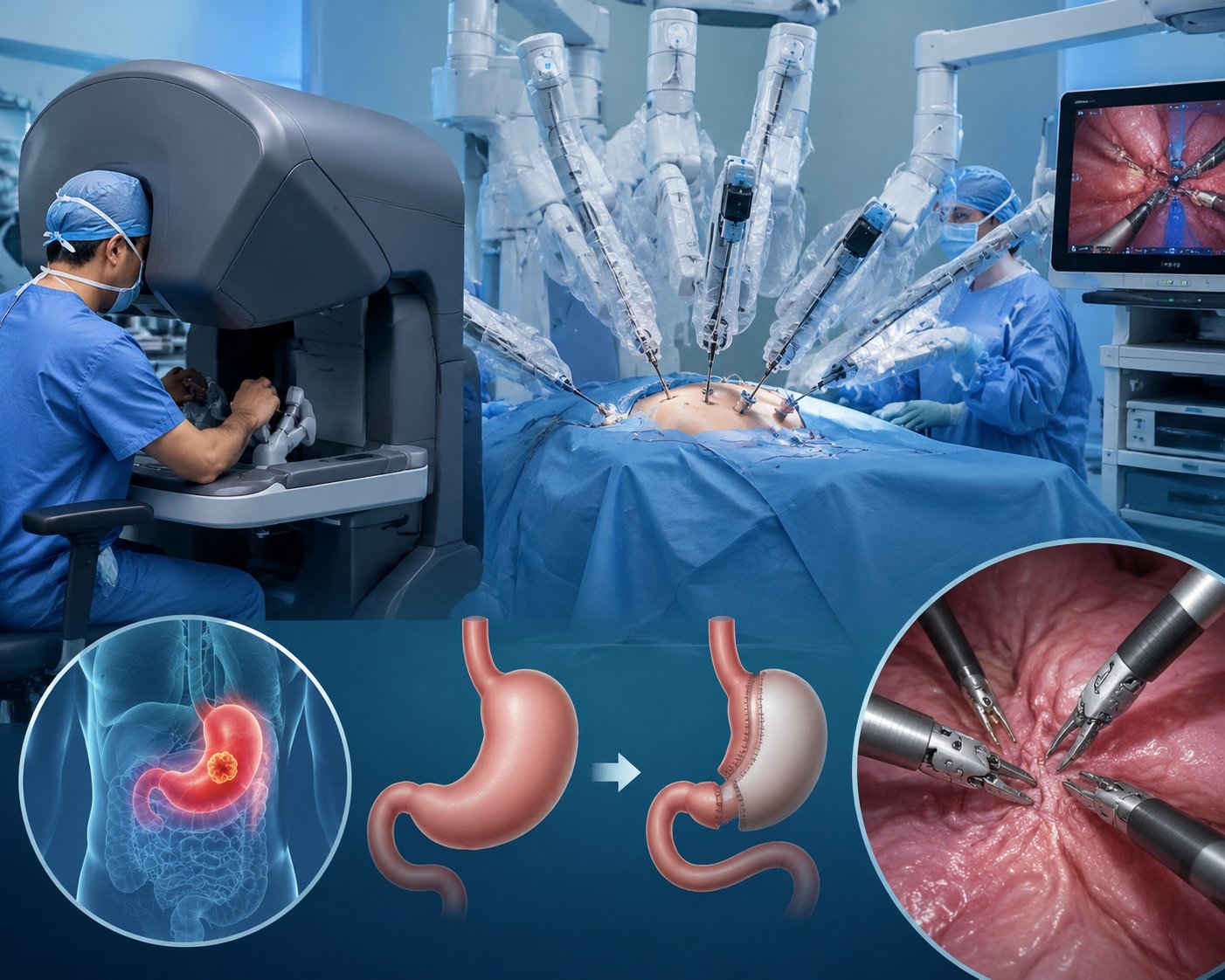
Robotic gastrectomy is a type of surgery where doctors use robotic arms to perform the operation. The surgeon controls these robotic arms from a special console. Because the robotic system offers precise movements, it helps doctors operate with great accuracy. This advanced gastrectomy technique is less invasive than traditional open surgery. Therefore, patients often have smaller cuts and less scarring. Robotic surgery for gastric cancer and other stomach diseases is now widely used in many hospitals.
Common Stomach Conditions Treated
Doctors use robotic gastrectomy to treat several stomach conditions. Some of the most common include:
For many patients, robotic surgery for gastric cancer offers a safer and more comfortable option. However, your doctor will decide if this method is right for your condition.
How the Robotic Procedure Works
During robotic gastrectomy, the patient receives general anesthesia. This means you will be asleep and feel no pain. Next, the surgeon makes a few small cuts in the abdomen. Through these cuts, the robotic arms and a tiny camera are inserted. The camera gives a clear, magnified view of the stomach. Meanwhile, the surgeon sits at a console and controls the robotic arms. These arms move with great precision, allowing the surgeon to remove the affected part of the stomach. After the surgery, the cuts are closed with stitches or staples. Because the cuts are small, healing is usually faster.
Benefits of Robotic Gastrectomy
Robotic gastrectomy offers many benefits over traditional surgery. For example, patients often experience:
Because of these advantages, many doctors recommend minimally invasive stomach surgery when possible. According to the World Health Organization, minimally invasive techniques can improve patient outcomes and reduce complications.
Risks and Considerations
Although robotic gastrectomy is generally safe, every surgery has risks. Some possible risks include:
However, your surgeon will discuss these risks with you before the procedure. It is important to follow all pre-surgery instructions to lower your risk of complications. If you have other health problems, let your doctor know. This helps them plan the safest approach for you.
Recovery and Aftercare
After robotic gastrectomy, most patients stay in the hospital for a few days. During this time, doctors will monitor your recovery closely. You may start with liquids and slowly move to soft foods. Because your stomach is smaller or partly removed, you may need to eat smaller meals. Your doctor or dietitian will give you a special diet plan. It is important to follow their advice to heal well. Most people can return to normal activities within a few weeks. However, everyone heals at their own pace. If you notice fever, severe pain, or unusual swelling, contact your doctor right away.
Prevention and Lifestyle Tips
While not all stomach conditions can be prevented, healthy habits can lower your risk. For example, you can:
Because early detection is key, talk to your doctor if you have a family history of stomach problems. They may suggest screening or other steps to protect your health.
Conclusion
Considering stomach surgery with advanced robotic techniques? Consult Dr. Dhaval Mangukiya for expert evaluation, personalised treatment guidance and to understand whether robotic gastrectomy is the right option for your condition.